
Waste
I make all of my leaves and shapes out of epoxy resin, but I am trying to ensure I produce as little waste as possible.
The resin waste I create falls into 2 categories: liquid waste – small amounts left over when I have finished filling my moulds, and solid waste – shapes I cannot use after they have cured (due to air bubbles or contamination with dirt). I have reduced both as much as possible – I always try make the same sized batches, so I know exactly how much resin I need to mix, and I have experimented with my processes to ensure I get the maximum possible yield of useable shapes. I cast the small amount of waste I do still produce into coloured blocks – layering any unusable shapes into my liquid waste after each set I produce – building up layer by layer over months of production. I then slice this block and make the striped squares into new jewellery pieces.
During my production I do my best to ensure all my equipment and tools are kept clean to preserve longevity. This allows me to safely reuse tradtionally disposable items like gloves and stirring sticks for long periods of time. When no longer safe to reuse, I responsibly dispose of all items. Any items that have been contaminated with unmixed resin (like the bottles it is stored in, or towels used to clean a spillage) are disposed off at a waste disposal centre in accordance with disposal regulations.
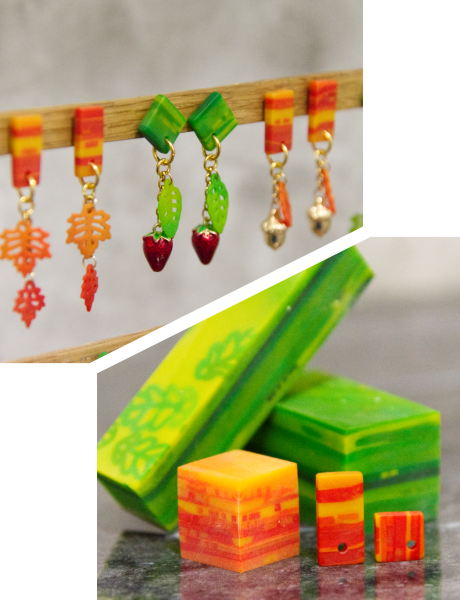
Materials
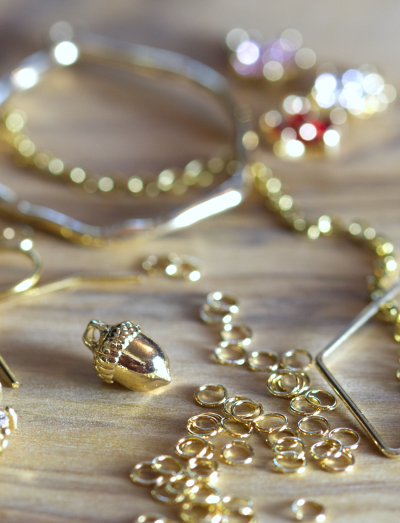
All of the findings I use in my jewellery are gold plated on a range of base metals. Most of my charms are also gold plated brass, sometimes with enamel and/or a protective coating on the gold. At my stall I have information about the materials of my charms and findings.
I only buy charms and findings from suppliers that state their products are nickel, lead and cadmium free, however I do not have the resources to independently verify this. The jump rings are the only exception as they are made from 304 stainless steel.
While some of my charms are manufactured with a protective coating, all gold plated items are susceptible to tarnishing over time. To prevent tarnishing try to keep the jewellery dry (for example do not wear in the shower or while exercising) and don’t expose to chemicals (like perfumes and moisturisers). Gently polishing items with a soft cloth and storing the jewellery in something that limits airflow (for example in a bag, jewellery box or lidded tub) will help to reduce tarnishing over time.
Care information is given on a card with every purchase.
My jewellery contains small parts – it is not suitable for children.
 Narnie's Autumn Breeze